Caponata
A classic Sicilian dish of aubergines, vegetables, and gentle agrodolce, meant to rest before serving and improve with time.
PRIMI
1/26/20262 min read
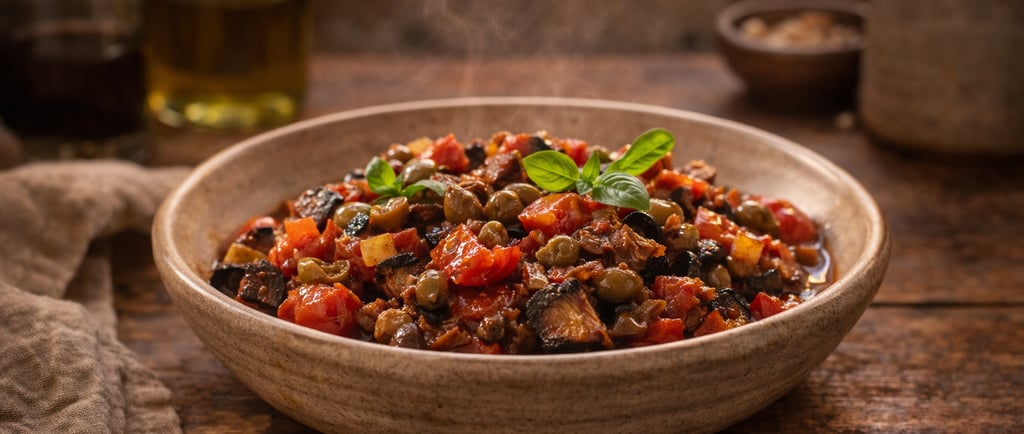
Caponata Siciliana
Ingredients
Serves 4
2 black oval aubergines
1 large red onion
2 celery stalks
100 g cherry tomatoes
50 g green olives, pitted
20 g salted capers, rinsed and drained
Extra-virgin olive oil, as needed
2 tablespoons brown sugar
½ glass white wine vinegar
40 g tomato paste
Salt, to taste
1 small bunch fresh basil
Optional
A handful of toasted pine nuts
Method
Dice the aubergines, sprinkle lightly with coarse salt, and place in a colander. Let them rest for about 30 minutes to release their bitterness. Rinse well and dry thoroughly.
Fry the aubergines in plenty of hot olive oil until golden. Remove and drain on paper towels to absorb excess oil.
In a wide pan, gently sauté the thinly sliced onion in a little olive oil over low heat. After about 10 minutes, add the diced celery and continue cooking for another 5 minutes, until softened.
Add the cherry tomatoes, cut into quarters, along with the tomato paste. Cook gently for 10–15 minutes, allowing the flavours to concentrate.
Stir in the olives and capers, then return the aubergines to the pan. Add the sugar and vinegar and cook for about 10 minutes, letting the sauce become balanced and glossy.
Season with salt, remove from the heat, and fold in the torn basil. Allow the caponata to cool completely. Refrigerate for several hours before serving.
If desired, finish with toasted pine nuts just before serving.
A Note on Tradition
The name caponata is often traced to the Latin caupona — a tavern or gathering place for sailors returning from the sea, where simple, flavourful dishes were served with wine. Over time, this humble preparation spread throughout the Mediterranean. In Sicily alone, dozens of regional variations exist, each shaped by local ingredients and custom.
To Serve
Caponata is traditionally served at room temperature.
It pairs well with meat or fish secondi, or simply spooned over toasted bread. It is especially good with homemade bread and a glass of Sicilian red wine, such as Nero d’Avola.
Wine at the Table
Caponata’s sweet-and-sour character calls for wines with freshness and restraint rather than power. Traditionally, it is enjoyed with simple, local wines that complement the dish without overwhelming it.
Nero d’Avola – A classic Sicilian choice, offering soft tannins and dark fruit that balance the agrodolce notes of the caponata.
Frappato – Lighter in body, with bright acidity and gentle aromatics, well suited to vegetable-forward dishes.
Cerasuolo di Vittoria – Sicily’s historic blend, combining freshness and depth, particularly fitting when caponata is served alongside a main course.
Grillo or Catarratto – When served as an antipasto, these crisp Sicilian whites provide clarity and lift.
Wine should be served simply, at the right temperature, and enjoyed as part of the meal rather than as its focus.